Ben Frank · 21 September 2026
Patterns in User Engagement Metrics During Digital Platform Handovers
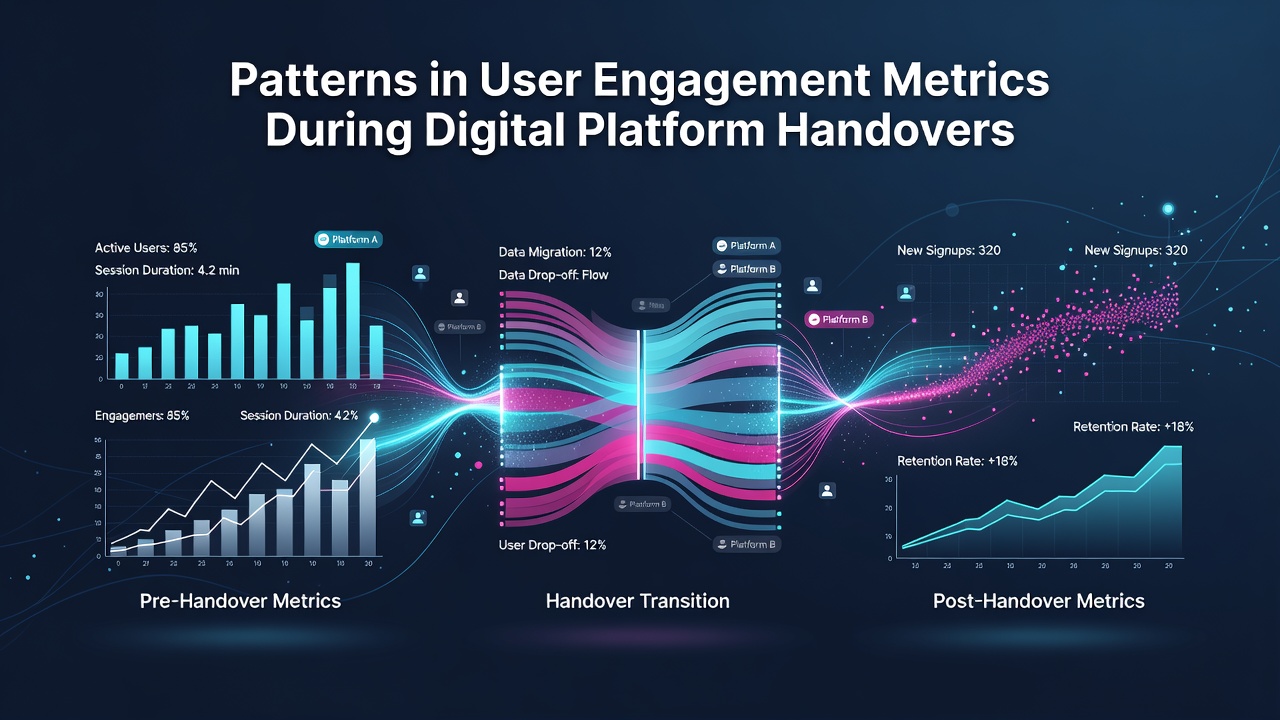
Digital platform handovers involve the transfer of user bases between systems during technology upgrades, ownership changes, or infrastructure migrations, and data from multiple studies show consistent shifts in engagement metrics such as daily active users, session length, and retention rates throughout these events.
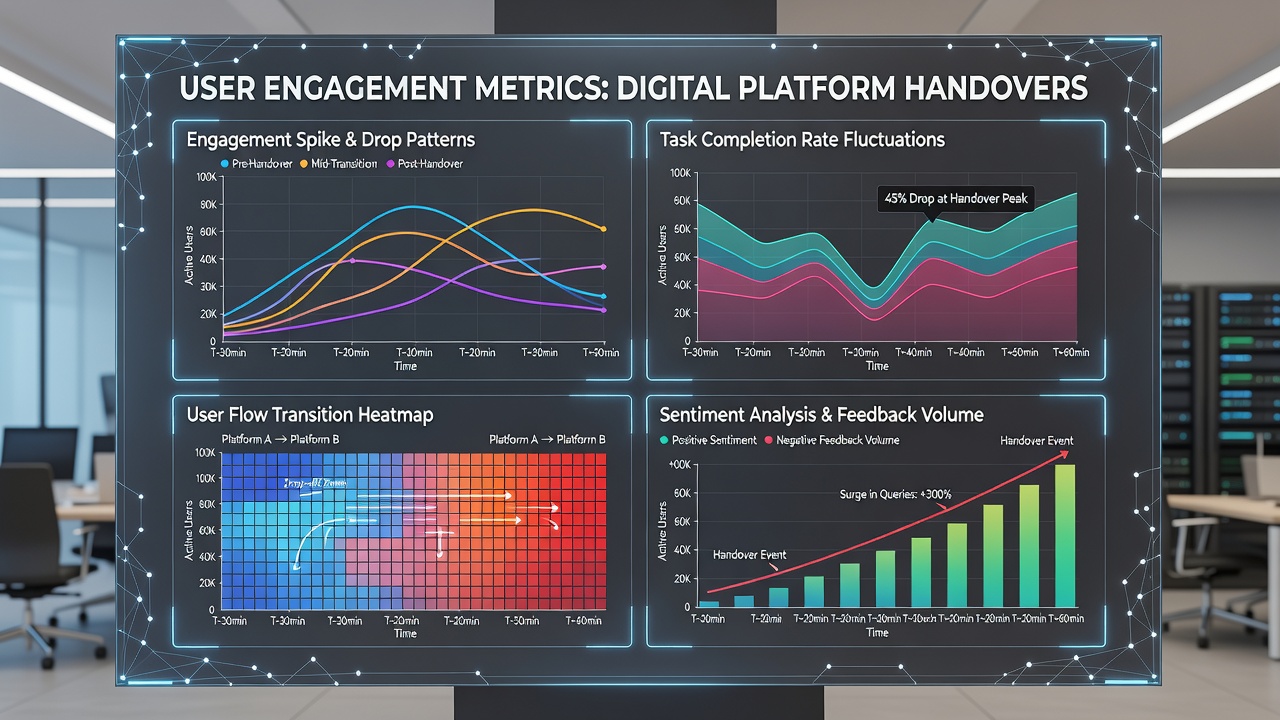
Researchers tracking these transitions note that initial drops in activity often occur within the first 48 hours as users encounter new interfaces or authentication flows, while subsequent rebounds depend on how quickly support resources address friction points.
Common Metric Fluctuations Observed
Engagement data collected during handovers reveal that bounce rates typically rise by 15 to 25 percent in the opening week, according to aggregated findings from technology migration analyses, because users face altered navigation structures and content layouts that require relearning.
Session durations frequently shorten at first yet extend again once users adapt, and retention curves flatten more slowly when migration teams provide clear migration guides and phased rollouts rather than abrupt switches.
One analysis of enterprise software transitions found that cohort retention at the 30-day mark recovered to 85 percent of pre-handover levels when organizations maintained parallel access options during the changeover period.
Segmented User Responses Across Demographics
Patterns differ by user group, with younger cohorts showing faster recovery in app-based handovers while older segments exhibit prolonged dips in login frequency, as indicated by telemetry from several large-scale platform updates completed in 2025.
Mobile users encounter distinct challenges compared with desktop users during these events because device-specific features such as push notifications and offline caching behave differently after backend shifts, leading to varied engagement recovery timelines.
Timing and External Influences on Recovery
Seasonal factors interact with handover schedules, and metrics collected around planned migrations in September 2026 are expected to reflect heightened baseline activity from back-to-school and fiscal-year-start periods, which can mask or amplify observed changes depending on the region.
External events such as regulatory announcements or competitor product launches further modulate these patterns, with data showing that simultaneous news cycles correlate with extended periods of reduced engagement across multiple documented cases.
Geographic variations appear in global platforms, where users in regions with stronger data-protection frameworks experience different privacy-related hesitation levels that affect sign-in rates immediately after a handover completes.
Measurement Approaches and Data Sources
Analysts rely on pre- and post-migration A/B testing frameworks together with cohort analysis to isolate handover effects from normal fluctuations, and reports from Pew Research Center provide benchmarks on digital service adoption that help contextualize these shifts.
Additional context comes from longitudinal studies issued by Statistics Canada, which track how Canadian users respond to digital service consolidations and highlight measurable differences in engagement persistence across provinces.
Conclusion
Overall, documented patterns demonstrate that engagement metrics follow predictable trajectories during digital platform handovers when teams apply structured migration practices and monitor segmented data streams, allowing organizations to anticipate and address temporary disruptions effectively.